
Oil palm yield is shaped by the number and weight of fruit bunches, and these depend on nutrition several years before harvest. A palm that is well nourished during its development produces more and heavier bunches for many years, while a nutrient-short palm shows the effect in lower and less consistent yields. A consistent programme that replaces what is removed each year supports a stable yield over the life of the palm.
The palm's demand changes with its age. Young palms need nutrients for the growth of the trunk and the fronds, and they need enough to support the first flowering. Mature palms need a steady supply to produce bunches each year. Ageing palms may need a different balance, and the programme should be reviewed as the palm grows and the canopy closes.
Nutrient demand
Potassium is the nutrient most often limiting oil palm yield, because it supports bunch weight and oil content. Nitrogen supports frond growth and leaf area, which drive the photosynthesis that feeds the bunches. Magnesium and boron play important roles in leaf health and bunch formation. Phosphorus is needed in smaller amounts, but it is important on low-phosphorus soils, particularly in young palms.
| Nutrient | Role | Common sign of shortage |
|---|---|---|
| K | Bunch weight and oil content | Yellowing and necrosis of older fronds |
| N | Leaf area and growth | Pale fronds, reduced vigour |
| Mg | Chlorophyll and frond health | Yellowing of lower fronds, sometimes with a striped pattern |
| B | Pollination and bunch formation | Poor bunch set |
Potassium and bunch weight
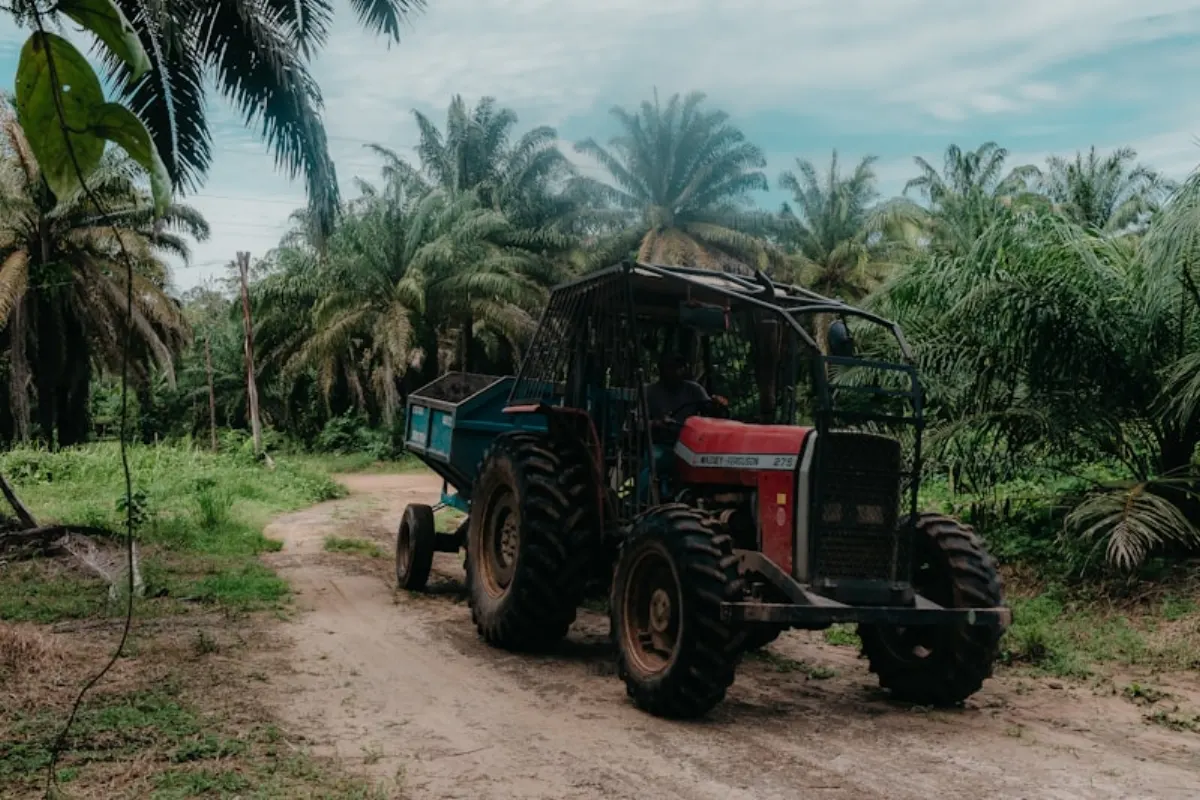
Potassium uptake is strongly linked to fruit bunch weight. The palm removes large amounts of potassium in each harvest, and a plan that does not replace this removal will show a slow decline in yield. Applying potassium at a rate matched to removal, and placing it in the active root zone, supports a sustained yield. Chloride sources must be used with care on sensitive soils, and the chloride content should be taken into account in the plan.
Potassium is often applied in several splits through the year, because a single large dose is more easily lost by leaching on sandy or high-rainfall soils. The timing should follow the palm's uptake pattern, with more potassium supplied during periods of rapid bunch development. Records of the bunch yield help the grower judge whether the potassium rate is adequate.
Planning the programme
- Use a tissue analysis of the leaf to check nutrient status at least once a year, sampling the same frond position each time.
- Set the programme around the palm's age and yield level, because young and mature palms have different needs.
- Adjust for soil type, rainfall and drainage, which change the losses from the root zone.
- Keep records of the fertilizer applied, the tissue results and the bunch yield, so the link between nutrition and yield can be seen.
Magnesium and boron
Magnesium deficiency is one of the most common problems in oil palm on some soils. It shows as yellowing of the lower fronds, sometimes with a striped pattern that spreads along the frond. Magnesium is needed for chlorophyll, and a shortage reduces the photosynthesis that supports bunch formation. A magnesium programme may be needed on sandy soils and in high-potassium systems, where the potassium competes with magnesium for uptake.
Boron is needed for pollination and bunch formation. A boron shortage can cause poor bunch set and reduced yield, even when the other nutrients are adequate. Boron has a narrow range between deficiency and toxicity, so applications should follow a tissue test and the local recommendation, rather than a routine rate.
Phosphorus and young palms
Young palms benefit from a good phosphorus supply to support root and trunk development. On low-phosphorus soils, the phosphorus should be placed near the root zone at planting and in the first years. The demand falls as the palm matures, so the programme can be adjusted once the palm is in production.
Keeping the plan on track
Review the programme each year with the latest tissue results and the bunch yield trend. If the yield falls while the tissue results are adequate, look at other factors such as water stress, pests, disease and the age of the palm. If the tissue results show a shortage, adjust the rate for the next cycle and recheck the palm's response.
Ground cover, residues and organic inputs
Empty fruit bunches, palm oil mill effluent and pruned fronds return nutrients to the plantation when they are applied properly. Empty bunches are rich in potassium, and applying them in the inter-row can supply a useful part of the palm's requirement. The nutrient content varies with the mill and the process, so the material should be tested before its value is credited in the programme.
Ground cover plants also influence the nutrient cycle. A healthy cover protects the soil from erosion, adds organic matter and supports soil biology. Choose cover plants that do not compete strongly with the palm for water and nutrients, and manage them so that they do not shade the palm's root zone.
Keep the organic inputs in the nutrition plan. A grower who applies empty bunches should reduce the mineral potassium accordingly, so that the potassium is not over-applied. The nutrient balance across the whole plantation should be checked each year, with the organic inputs included.
Water, drainage and the palm
Palms in waterlogged or poorly drained areas have less root activity, and their nutrient uptake falls even when the soil test is adequate. Drainage should be checked before any change to the fertilizer rate, because a drainage problem can look like a nutrition problem in the tissue test.
Drought stress has a similar effect. A palm short of water cannot take up nutrients efficiently, and the tissue test may show a deficiency that disappears after rain. Record the rainfall alongside the tissue results, so that water stress can be separated from a true nutrient shortage.
Planning for replanting
At the end of its productive life, an oil palm is replaced. Replanting is a major investment, and the nutrition of the old palms affects the soil the new palms will grow in. Growers should plan the nutrient management of the old block with replanting in mind, including the organic residues left in the field and the soil test results before the new planting.
The new palms need a good start. A soil test before replanting shows the nutrient status of the site after many years of cropping, and it guides the rate of phosphorus and potassium needed for the young palms. Planning this carefully reduces the risk of a slow start in the new block.
Common questions
Why is magnesium important? Magnesium is central to chlorophyll. Deficiency shows as yellowing of older fronds, and it can reduce the photosynthesis that supports bunch formation. Potassium and magnesium compete for uptake, so a high potassium rate can induce a magnesium shortage.
How often should I sample the leaves? Once a year is common, with the same frond position each time. Consistent sampling makes it possible to compare the results over the palm's life, which is more useful than a single result.
Can I use the same plan for every block? No. Soil type, rainfall, drainage and palm age all change the plan. Use tissue and soil results to adjust the programme for each block, and keep the records separately.
- Local palm oil board and extension guidance on oil palm nutrition (current edition).
- International Plant Nutrition Institute (IPNI), oil palm nutrition resources.
- Corley, R.H.V. and Tinker, P.B., The Oil Palm (academic reference on oil palm physiology and nutrition).
- Published research on oil palm fruit bunch yield and potassium supply.
Recommendations depend on local soil, climate and crop conditions. Follow the product label and local regulations, and consult a qualified agronomist for field decisions.