
Greenhouse tomato and pepper crops are grown in a controlled environment where water and nutrients are delivered in the irrigation solution. Their demand rises sharply as fruit load builds, and small imbalances show quickly in fruit quality. Because the grower controls the feed, the crop's nutrition is also the grower's responsibility, and the programme must be checked every week.
Protected crops differ from field crops in several ways. The root zone is small, the water and nutrient supply is continuous, the salt level can rise quickly, and the environment is warm and humid. These conditions make the crop productive, but they also increase the risk of salt damage, calcium disorders and disease. A good programme balances the supply against the crop's rapid growth, and adjusts it as the crop develops.
Three stages of the crop
| Stage | Nutrient focus | Practical note |
|---|---|---|
| Planting and establishment | Balanced N, P, K at moderate level | Keep the root zone moist and avoid high salt |
| Flowering and early fruit | Higher potassium, steady nitrogen | Supports fruit set and early fruit size |
| Fruit filling | Potassium and calcium | Supports fruit size and disorder prevention |
In the establishment stage, the young plant needs a moderate, balanced feed, because its roots are small and the salt level in the root zone must be kept low. Too much nitrogen at this stage gives soft, leafy growth and delays flowering. The grower should watch the colour and the growth rate, and adjust the feed to keep the plant steady.
At flowering and early fruit set, the plant's demand for potassium rises. Potassium supports fruit size and quality, and it helps the plant manage the water it takes up. Nitrogen should be kept steady rather than increased, so that the plant does not switch to vegetative growth at the expense of fruit.
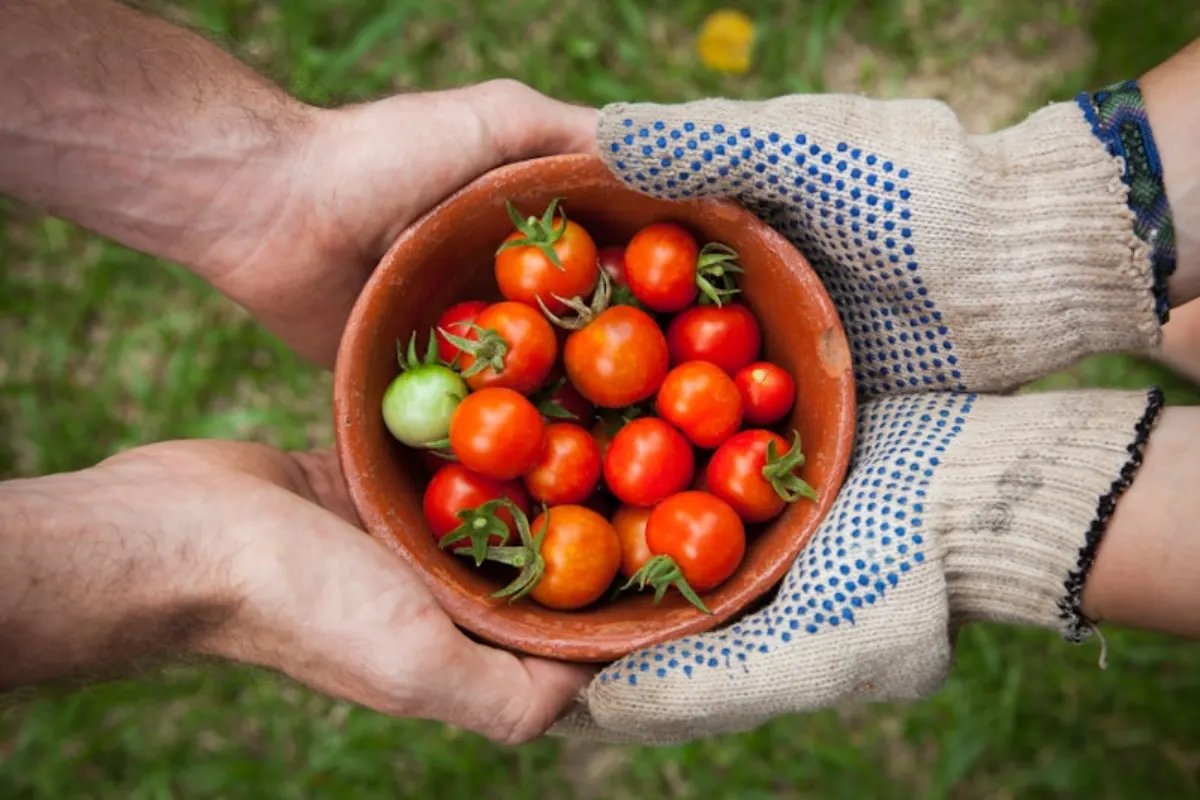
During fruit filling, the plant needs a large supply of potassium and calcium, and the nitrogen should be tapered. A rapid fruit filling period is also when the risk of calcium-related disorders is highest, so water management becomes critical. The grower should avoid large swings in the feed, which can interrupt calcium movement into the fruit.
Calcium and blossom-end rot
Blossom-end rot in tomato and pepper is usually linked to a calcium supply problem at the fruit, rather than a shortage in the soil or the feed. Calcium moves to the fruit in the water that the plant transpires, so the fruit receives less calcium when transpiration is low, which happens in humid conditions and when the plant is not taking up enough water. Uneven water supply and high humidity reduce calcium movement into the fruit, so water management is as important as calcium supply.
The solution is to keep the water supply steady, to ventilate the house to lower humidity, and to maintain a balanced feed with an adequate calcium level. Adding more calcium to a feed that is already rich in it does not solve the problem, and it can raise the salt level. The fix is usually a change in the environment and the irrigation pattern, rather than a higher calcium dose.
Fertigation planning
- Check the electrical conductivity and pH of the feed solution and the drainage at the same time each week.
- Adjust the nutrient ratio as the crop moves from vegetative to generative growth.
- Use tissue or sap analysis to confirm the programme every few weeks, sampling the same leaf position each time.
- Keep stock solutions separate where calcium and phosphate or sulphate would react.
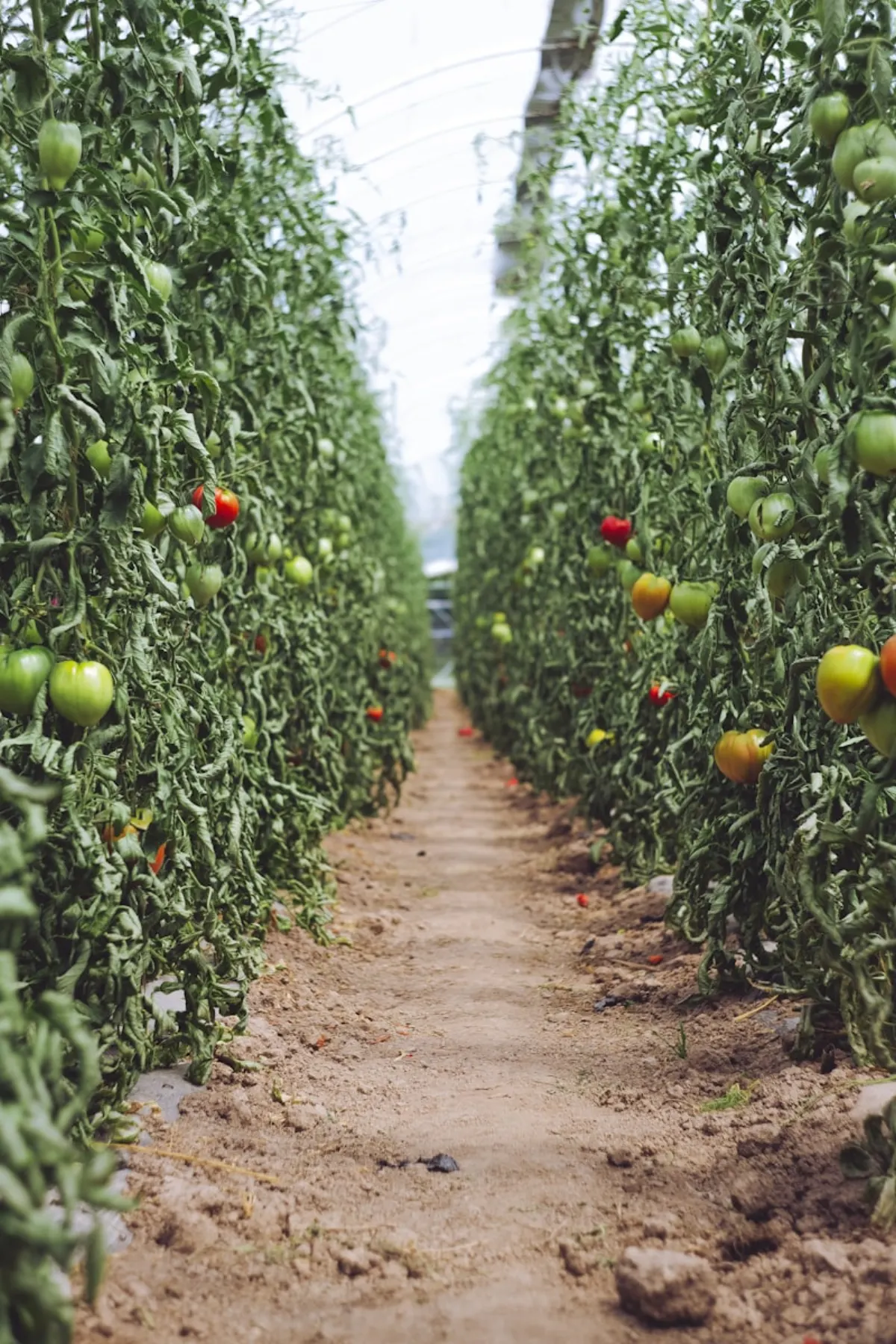
A weekly feed check is the backbone of protected crop nutrition. Measure the feed and the drainage, and compare them with the target. A drainage reading that is much higher than the feed shows salt build-up, and the recipe or the irrigation should be changed. A drainage reading that is lower than the feed shows that the crop is taking up nutrients well, or that some of the solution is moving past the root zone.
Water, humidity and climate
The climate inside the greenhouse drives the crop's water use. On bright, warm days the plant transpires quickly and needs more water and nutrients. On cloudy or humid days, transpiration falls, and the plant takes up less. The irrigation schedule should follow the climate, using radiation sensors or simple timers adjusted by the grower, rather than a fixed schedule.
Humidity affects both disease and calcium movement. High humidity favours grey mould and other fungal diseases, and it reduces transpiration, which lowers the calcium supply to the fruit. Ventilation, heating and dehumidification all help manage humidity, and they should be part of the nutrition plan.
Training, pruning and crop load
Pruning and training change the balance between leaf area and fruit. A plant with too many leaves competes with the fruit for nutrients, while a plant with too few leaves cannot supply the fruit. The grower should prune to match the crop load, keeping the leaf area that supports the fruits on the truss, and removing excess side shoots and old leaves.
A heavy crop load requires a stronger nutrition programme. A light crop load can be fed more lightly. Matching the feed to the crop load, rather than to the calendar, gives a better balance between yield and plant health.
Substrate and root health
Most protected tomato and pepper crops are grown in substrates such as rockwool, coir or peat, rather than in soil. The substrate holds little reserve, so the feed must supply the nutrients continuously. Substrate choice also affects the buffering of the feed, and a substrate that drains quickly needs more frequent, smaller doses than one that holds water.
Root health depends on the feed, the oxygen supply and the temperature of the root zone. Warm, saturated substrates with poor aeration encourage root rot, and the uptake of nutrients falls. Keep the drainage open, monitor the root zone temperature, and check the roots when the crop shows a sudden loss of vigour.
Labour, hygiene and crop safety
Protected crops are handled often, and the people who work in the house can spread disease between plants. Hygiene practices, such as washing hands and tools between sections and removing dead leaves promptly, protect the crop and reduce the need for corrective sprays. Good hygiene also protects the nutrition programme, because a diseased plant takes up nutrients poorly.
Train the staff who measure and adjust the feed. Errors in the mixing ratio or in the electrical conductivity reading can damage the whole crop in a few days, so the process should be written down, checked and supervised.
Common questions
How do I know the feed is right? Compare the feed and drainage readings, the crop's appearance and the tissue results. If the drainage is much richer in salts than the feed, the recipe needs review.
Does the variety change the plan? Yes. Varieties differ in their vigour, fruit load and sensitivity to salinity and calcium, so adjust the programme to the variety in use. Ask the seed supplier for the variety's sensitivity and vigour profile.
What about pepper? Pepper is generally more sensitive to salinity than tomato, and it responds well to a steady feed with moderate nitrogen. The same stages apply, but the feed concentration should be kept lower during establishment and early fruit.
- Haifa Group, public crop guides for greenhouse vegetables.
- Yara, public crop nutrition guidance for protected vegetables.
- University extension publications on greenhouse vegetable nutrition and fertigation.
- Adams, P., published work on nutrient management in soilless tomato production (academic literature).
Recommendations depend on local soil, climate and crop conditions. Follow the product label and local regulations, and consult a qualified agronomist for field decisions.